In a progressive cavity pump the stator wears first: abrasive solids, dry running, excessive speed and the wrong elastomer are the main causes. Falling flow at the same speed, rising power draw and pulsation are early signs. Replacing the stator (and the rotor when its coating is worn) restores capacity; choosing the correct elastomer and running speed is what makes the new set last.
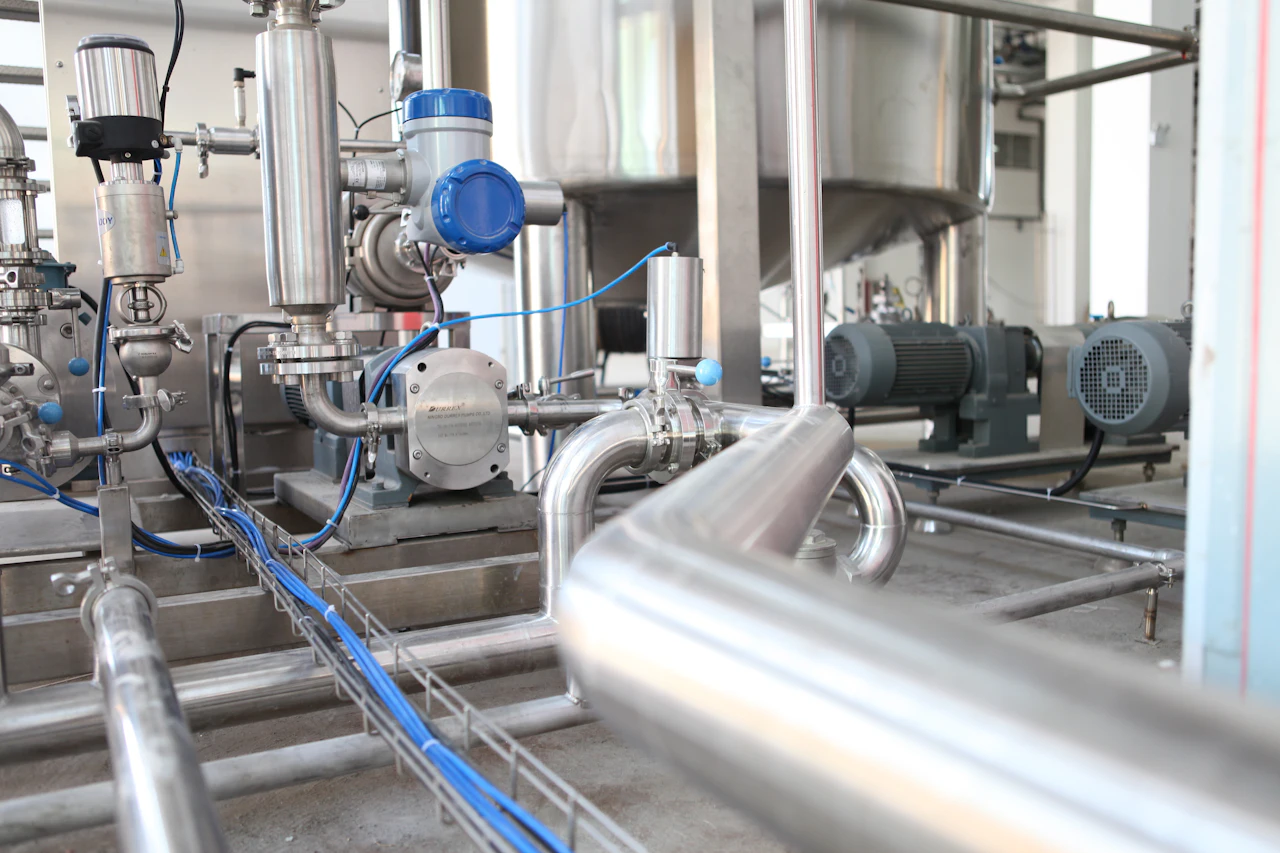
Progressive cavity pumps — also called eccentric screw or Moineau pumps — move viscous, shear-sensitive and solids-laden fluids that other pumps cannot handle: sludge, curd, fruit preparations, adhesives, crude oil and slurries. Their performance depends entirely on the fit between a metal rotor and an elastomer stator. This guide explains why that fit is lost, how to detect it early and how to specify replacement parts for PCM Moineau and other progressive cavity pumps.
How a progressive cavity pump wears
The rotor is a single helix that turns inside a double-helix stator. Their contact lines form sealed cavities that travel from suction to discharge. A slight interference fit between rotor and stator is what creates the seal and the pressure. As the elastomer wears, swells or hardens, the interference changes: too little causes slip (lower flow and pressure), too much causes heat, high torque and tearing. You can find a good technical overview of the principle in this description of progressive cavity pumps.
The main causes of stator failure
- Abrasion: sand, grit and fibres wear the elastomer and the rotor coating. Wear grows rapidly with speed, so abrasive duties need large pumps running slowly.
- Dry running: the elastomer relies on the pumped fluid for cooling and lubrication. Even a short dry run can burn the stator — a characteristic hard, glazed or cracked surface at the suction end.
- Chemical attack: solvents, oils or cleaning chemicals make the wrong elastomer swell or harden.
- Temperature: heat makes the elastomer expand, increasing interference and torque; a stator for hot media is often supplied with a smaller (undersize) rotor.
- Over-pressure: a closed discharge valve can push a positive displacement pump far above its rating within seconds.
Diagnosing rotor and stator wear
| Symptom | Likely cause | What to check |
|---|---|---|
| Lower flow at the same speed | Worn stator or rotor (lost interference) | Compare flow / pressure with the commissioning curve |
| Pump cannot build pressure | Severe stator wear or torn elastomer | Inspect stator inlet and outlet; measure rotor diameter |
| High starting torque, motor trips | Swollen stator (chemical or temperature) | Check elastomer compatibility and product temperature |
| Rubber particles in the product | Stator tearing or dry running | Inspect for burnt suction end; check dry-run protection |
| Noise and vibration | Worn coupling rod / universal joints | Check joint play and seals of the joint sleeves |
| Leak at the shaft | Worn mechanical seal or packing | Replace seal; check shaft sleeve for scoring |
A simple and reliable method is to track flow per revolution. Note the flow and pressure at a fixed speed when the pump is new; when capacity at the same duty drops by roughly 15–20%, plan a stator change. Measuring the rotor’s major and minor diameter with a micrometer during the stator change tells you whether the rotor must be replaced too.
Choosing the stator elastomer
The stator compound must suit the fluid, the temperature and the abrasiveness. Most manufacturers offer several compounds for the same pump size:
| Elastomer | Typical use | Approx. temperature limit | Notes |
|---|---|---|---|
| NBR (nitrile) | Sludge, wastewater, oils, general industry | approx. 80–100 °C | Most common, good abrasion resistance |
| Soft NBR | Highly abrasive slurries at low pressure | approx. 80 °C | Absorbs particles, lower pressure per stage |
| EPDM | Hot water, acids, alkalis, CIP | approx. 100–120 °C | Not for oils and fats |
| FKM (Viton®) | Solvents, fuels, aggressive chemicals | approx. 120–150 °C | Higher cost, lower abrasion resistance |
| Food-grade NBR / EPDM | Dairy, curd, fruit, bakery | per compound | Request documents for EC 1935/2004 and FDA |
In hazardous areas, the complete pump assembly (including the motor and any sensors) must meet the ATEX equipment rules; when ordering replacement parts for ATEX pumps, give the full nameplate so that the correct certified components are supplied.
Rotor wear and coatings
Rotors are usually hardened or hard-chrome-plated steel or stainless steel. Chrome plating protects against abrasion, but once it wears through, the base metal erodes quickly and starts damaging the new stator. Look for a dull band along the rotor crests, pitting or measurable loss of diameter. For highly abrasive duties, ceramic- or tungsten-carbide-coated rotors last considerably longer.
Replace or rebuild?
For most pumps the economical approach is to replace the stator every time capacity drops, and the rotor every second stator change or whenever its coating is damaged. Universal joints, coupling rods and the shaft seal should be inspected at the same stop. Keeping a complete “rotating assembly kit” (rotor, stator, joints, seals) for critical pumps reduces the downtime of a stator change from days to hours.
The Hydraulic Institute publishes standards and guidance for rotary positive displacement pumps that are useful for setting acceptance tests after a rebuild.
Parts to keep in stock
| Part | Why | Typical quantity |
|---|---|---|
| Stator (correct elastomer) | Wears first, long lead time for some sizes | 1 per critical pump |
| Rotor | Replace with every 1–2 stators | 1 per pump type |
| Universal joint / pin joint kit | Joint wear causes vibration | 1 kit |
| Mechanical seal or packing set | Leaks stop production | 1 set |
| Joint sleeves and O-rings | Cheap, often damaged during dismantling | 2 sets |
Impex Profit supplies rotors, stators in all elastomers, joints and seal kits for PCM progressive cavity pumps and other brands, plus high-pressure pump parts such as Interpump repair kits and SPX FLOW / Waukesha pump parts. Send us the pump model, serial number, fluid and temperature, and we will confirm the right stator compound. For planning stock levels see our guide to the critical spare parts list; for cross-border orders, our customs guide for spare parts explains tariff codes and duties.
Get a Quote from Impex Profit
Send us the machine model, serial number or part number. We confirm the right part, price and lead time within 24 hours and deliver worldwide with full export documents.
Request a Quote →