Centrifugal separators need an intermediate service roughly every 4,000 operating hours (or annually) and a major service every 8,000 hours or two years, using the manufacturer’s intermediate and major service kits. Kits replace seals, O-rings, gaskets and bearings; the bowl, discs and drive must also be inspected. Rising vibration, longer run-up times, poor separation and leaks are signs that service is overdue.
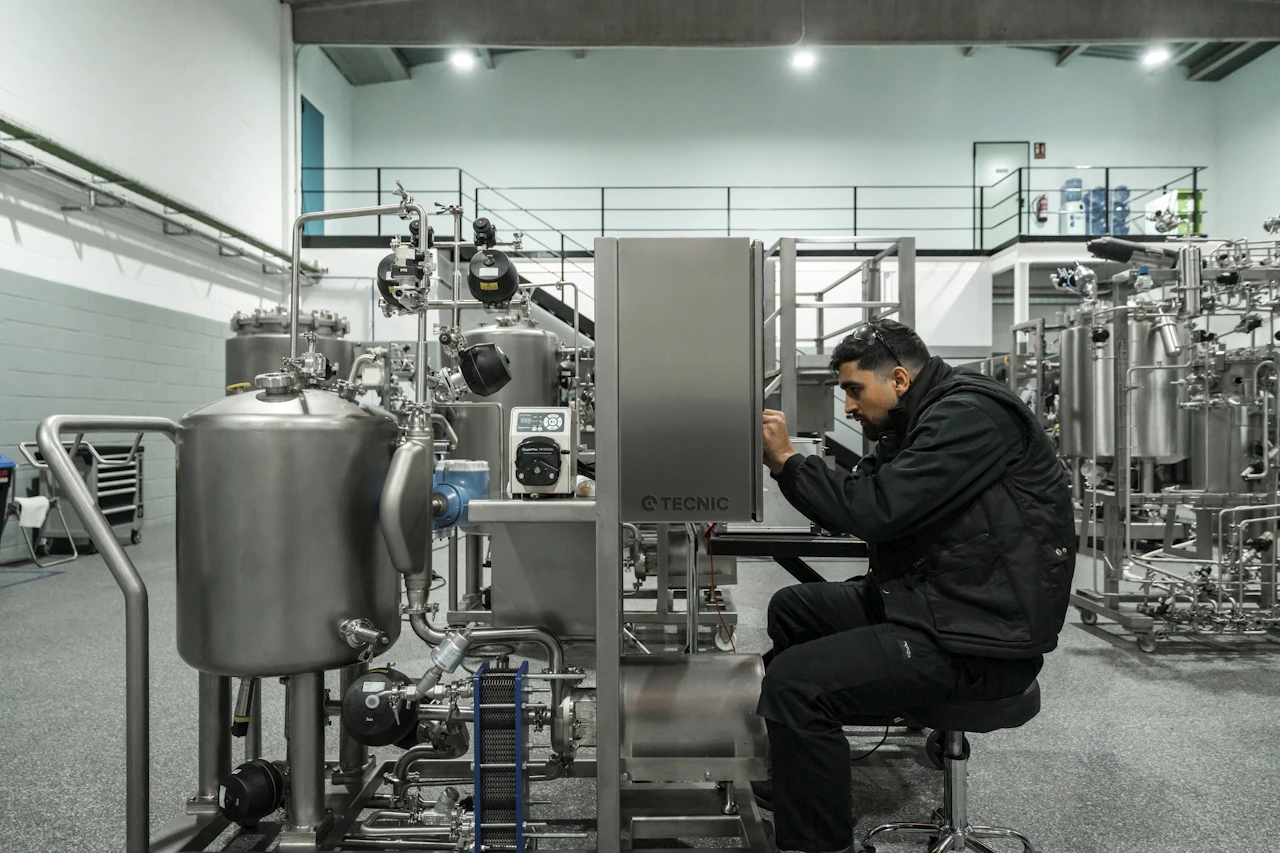
Disc-stack separators and clarifiers — from GEA Westfalia, Tetra Pak (Tetra Centri), Alfa Laval, Flottweg and others — run at several thousand revolutions per minute with bowls weighing hundreds of kilograms. They are among the most valuable and most safety-critical machines in dairies, breweries, juice, olive oil and pharmaceutical plants. Good maintenance protects separation efficiency, product yield and, above all, the people working near the machine.
How a disc-stack separator works
The product enters the rotating bowl and flows through a stack of conical discs. Centrifugal force — thousands of times stronger than gravity — separates liquids of different density (cream from skim milk, oil from water) and throws solids to the bowl periphery, from where they are discharged intermittently through ports opened by a sliding piston. Every one of these functions depends on seals: the operating water system, the sliding piston, the paring discs and the inlet/outlet all have O-rings and gaskets that wear with each cycle. Decanter centrifuges, used for higher solids loads, work on a similar principle with a scroll conveyor; see an overview of decanter centrifuges.
Service intervals
Manufacturers define intervals in operating hours and calendar time — whichever comes first. The table summarises typical practice; always follow the instruction manual of your machine.
| Service | Typical interval | Main tasks |
|---|---|---|
| Daily / weekly checks | Every shift / weekly | Vibration, oil level, run-up time, discharge function, leaks |
| Oil change | approx. 1,500–2,000 h | Gearbox or drive oil, oil filter, check for water and wear metal |
| Intermediate service (IS) | approx. 4,000 h or 12 months | Bowl seals and O-rings, sliding piston seals, operating water system |
| Major service (MS) | approx. 8,000 h or 24 months | All IS tasks + bearings, spindle, drive, couplings, full bowl inspection |
| Bowl NDT inspection | Per manufacturer / local rules | Crack and corrosion inspection of bowl body and lock ring |
What the service kits contain
Manufacturers package wear parts into kits so that nothing is forgotten during a stop. Ordering by kit number for your exact bowl and machine type is the safest way to get every seal.
| Kit | Typical content |
|---|---|
| Intermediate service kit (bowl kit) | Bowl O-rings and gaskets, sliding piston seals, seal rings of the operating water system, paring disc gaskets |
| Major service kit (frame / drive kit) | Spindle bearings, neck bearing springs and buffers, drive seals, friction pads / couplings, gaskets of the frame |
| Operating water kit | Valves, nozzles and seals of the hydraulic discharge system |
| Inlet / outlet kit | Seals of the inlet pipe, paring chambers and outlet housing |
Warning signs that service is overdue
- Rising vibration or new noise — bearings, imbalance from uneven solids or damaged discs.
- Longer run-up or run-down time — friction coupling, belt or bearing problems.
- Incomplete or irregular discharges — worn sliding piston seals or operating water valves.
- Poorer separation (fat in skim milk, solids in clarified product) — fouled disc stack, wrong back-pressure or worn paring discs.
- Water or product leaks at the frame — failed seals.
- Water in the oil — failed seals in the drive area; change the oil immediately.
Bowl inspection and safety
The bowl stores enormous energy at full speed. Corrosion pits, cracks, erosion of the discharge ports or a damaged lock ring can lead to catastrophic failure. That is why manufacturers require regular inspection, correct assembly with matching bowl parts (bowl parts are often balanced as a set) and never exceeding the rated speed or product density. Machinery safety requirements in the EU are set by the Machinery Regulation (EU) 2023/1230; hygienic design principles for food separators are published by EHEDG.
Spare parts to keep in stock
| Part | Reason | Quantity |
|---|---|---|
| Intermediate service kit | Needed at every IS; long lead time for some models | 1–2 |
| Major service kit | Planned major stop | 1 before the planned date |
| Operating water valve / solenoid kit | Discharge failures stop the line | 1 |
| Spindle bearings set | Vibration can force an emergency stop | 1 for fleets of several machines |
| Gearbox / drive oil and filter | Oil changes and emergency top-ups | Per schedule |
| Special tools | Lock ring spanner, lifting tools | Check availability |
OEM or certified-equivalent kits?
For machines under warranty and for bowl and spindle parts, OEM parts are the safe choice. For seal kits on machines outside warranty, certified-equivalent kits made to the original specification can lower cost significantly — provided materials are documented and fit is guaranteed. Read our guide on recognising genuine spare parts before buying kits from unknown sources.
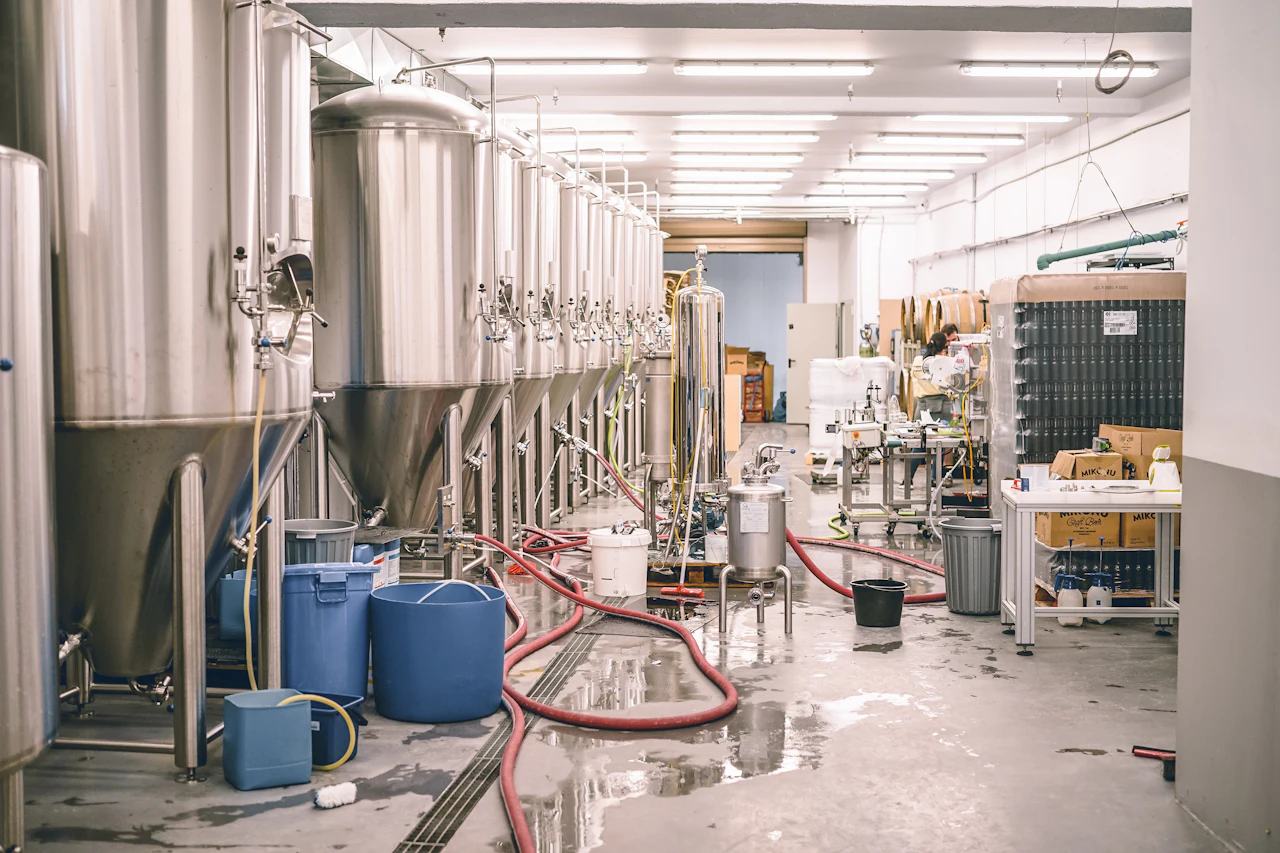
Impex Profit supplies separator and decanter service kits, bowl seals, bearings and operating water parts for GEA Westfalia, Tetra Pak, Alfa Laval and other brands — see our separator and centrifuge parts page. We also supply Niro Soavi homogenizer parts and plate heat exchanger gaskets for the same dairy and beverage lines, and can add them to your critical spare parts list. Send us the machine type, bowl number and serial number and we will confirm the correct kits.
Get a Quote from Impex Profit
Send us the machine model, serial number or part number. We confirm the right part, price and lead time within 24 hours and deliver worldwide with full export documents.
Request a Quote →